


picture your day.
alarm goes off at 7. you’ve checked WhatsApp, two work emails, the Instagram story your friend posted at 1am, and a reel about morning routines before your feet touch the floor.
you shower. open Swiggy on the toilet. order breakfast. open Zepto. add toothpaste. add a chocolate. add three things you don’t need. order.
standup at 10. you’re on mute, scrolling X in another tab. someone says your name. you unmute. “nothing from my end.”
lunch. you eat with one hand, scroll with the other.
3pm dip. you open Instagram. twenty minutes vanish.
dinner. Netflix. phone in lap.
bed. phone glow on the ceiling till 1am.
you did this yesterday too. and the day before. you’ll do it tomorrow.
and here’s the thing.
some part of you knows this is wrong. some part of you is screaming. but that part is small. and tired. and losing.
REWARD MECHANISM
neuroscientists call it the reward circuit. the loop in your brain that decides what you want.
that loop has one job. spot something good. make you chase it.
in the jungle, “good” meant rare. a ripe fruit. a potential mate. a new piece of information that might keep you alive.
the loop fires. you chase. you survive.
that’s it.
that’s the whole machine.
but it was not built for 2026.
(A SMALL INTERLUDE)
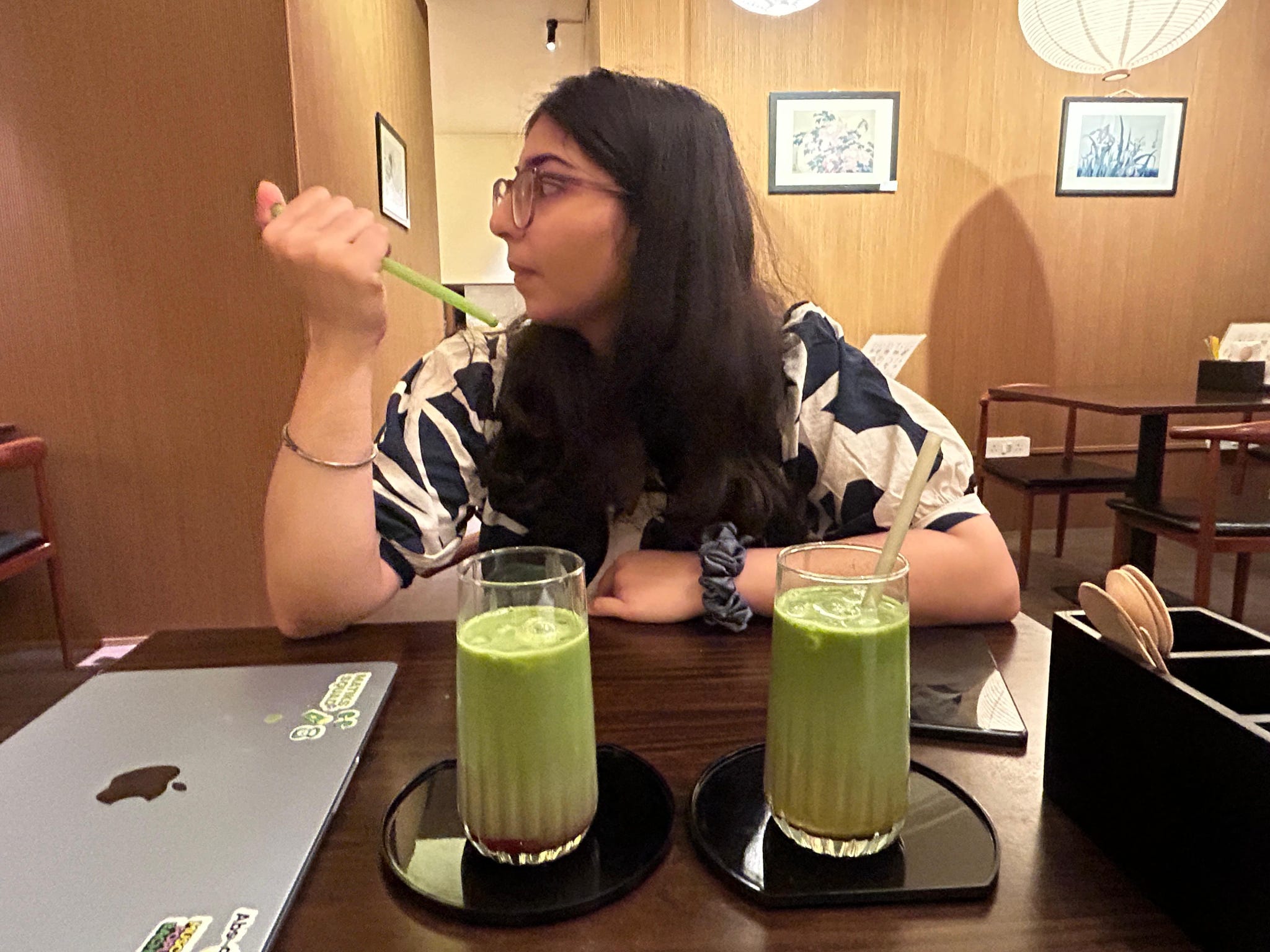
it’s 08:47pm. Bangalore. i’m here at Teka, Indiranagar with matcha. i just shut my phone and laptop because i needed to take a break from Twitter (laptop) and Insta (phone).
i’ve been thinking about this all week.
why is it so hard to just... not.
why does the phone always win.
THE SCIENCE (STAY WITH ME)
everyone gets dopamine wrong.
dopamine isn’t pleasure but wanting.
Kent Berridge, a neuroscientist, spent decades proving this. he found that the brain has two separate systems. one for wanting (motivation, craving, the pursuit) and one for liking (actual enjoyment).
dopamine drives wanting.
liking is run by a different chemistry.
read that again, because it explains your entire life.
you can spend an hour scrolling and not enjoy a single second of it. the wanting circuit is firing. the liking circuit is empty.
that’s not a bug. that’s the whole machine.
BUILT FOR THE JUNGLE
in the jungle, that wanting circuit was sacred. it only fired when something rare and survival-relevant showed up. a ripe mango. a potential mate. a novel piece of information that might keep you alive.
the system assumed: if this is firing this hard, it must be rare. drop everything. chase it.
that assumption is wired in. your brain still believes scarcity is the default.
but you’re not living in scarcity anymore.
you’re living in a world where every single trigger that the system was built to chase is available on a button. calorie-dense food: Swiggy. sexual novelty: any app. social information: Instagram. status data: LinkedIn. curiosity: Twitter. music: Spotify.
all of it.
all the time.
one tap.
you didn’t get more disciplined as the world got faster. the world got better at hijacking the same circuits that were always there.
AND THE APPS KNOW IT
there’s a second layer. the dopamine system doesn’t fire hardest when you get the reward. it fires hardest when the reward is uncertain.
this is why slot machines work. B.F. Skinner figured this out in the 1950s. variable-ratio reinforcement. the unpredictability itself is the drug.
pull-to-refresh is a slot machine.
every time you pull down on Instagram, your brain doesn’t know if the next post will be boring or amazing. that uncertainty is the hit. the post itself is almost a footnote.
come on.
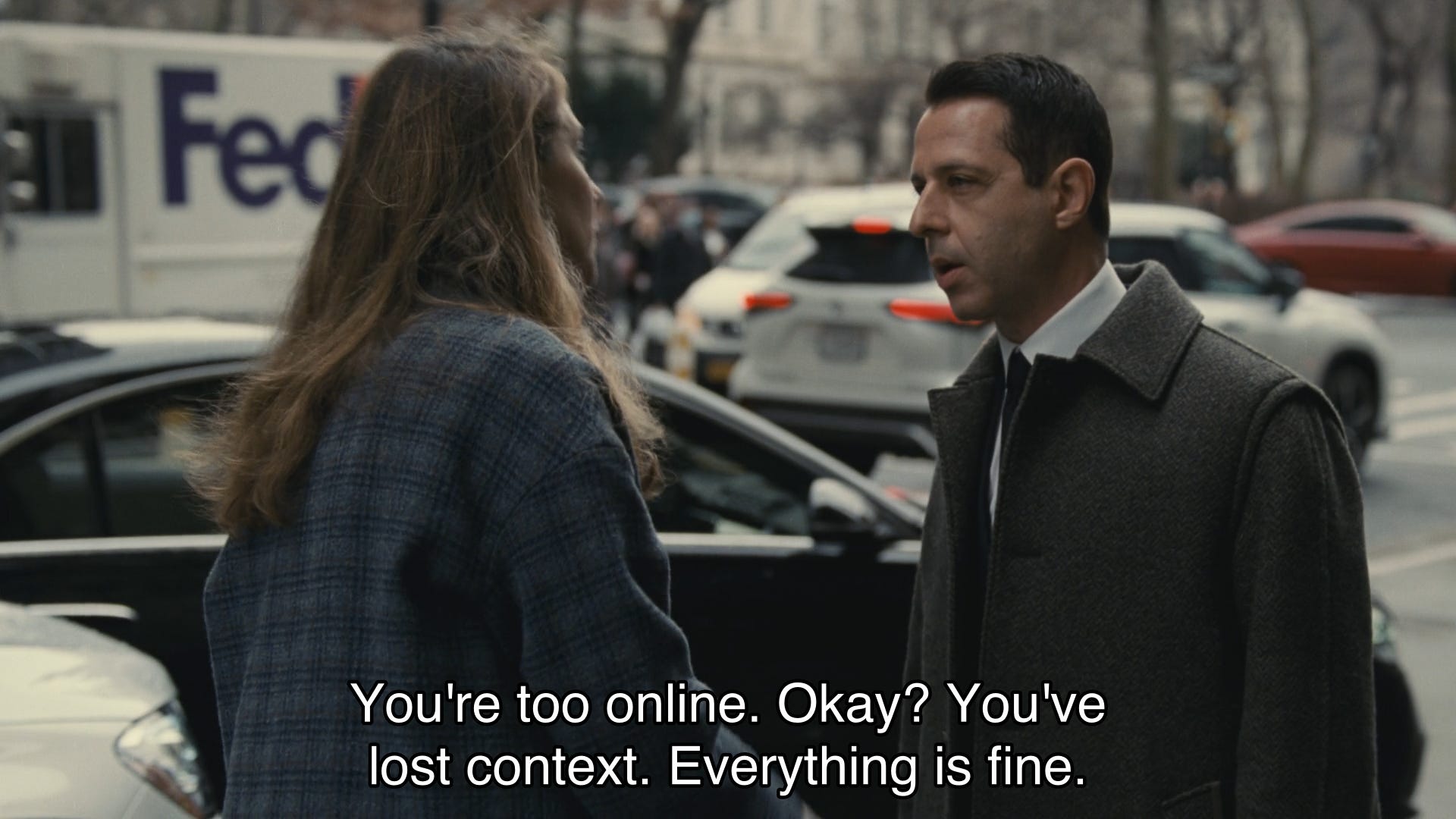
and it gets worse.
Anna Lembke, a psychiatrist at Stanford who runs an addiction clinic, has this concept she calls the pleasure-pain balance. the brain is obsessed with equilibrium. when you pound the reward circuit hard for long enough, it compensates. it dials itself down. fewer receptors. lower baseline.
the more you stimulate, the less you feel.
so the walk that used to be enough? doesn’t register anymore. the book? boring. the conversation? flat.
your baseline has been pushed below zero, so even ordinary life now feels like deprivation.
and what do you do when ordinary life feels empty?
you pick the phone back up.
WHAT’S ACTUALLY HAPPENING TO YOU
1. it’s not a willpower problem. it’s a baseline problem.
willpower is a tax on a rigged system. your brain thinks the phone is food. silence is starvation.
you’re not weak. you’re calibrated.
2. boredom isn’t a problem. it’s the reset.
every time you reach for the phone the second a moment goes empty, you abort the reset.
then you wonder why nothing feels good anymore.
because the meter never gets to zero.
you’re permanently overdrawn.
rules aren’t restriction. they’re protection.
the part of you that wants to read, build, sit with a friend, finish the project?
it cannot overpower the urge in the presence of the stimuli.
the only way it wins is by deciding in advance. before the circuit fires.
your prefrontal cortex is the slave. not the master.
THE FIX STARTS WITH YOU
it’s easy to read this and go: yeah, the apps are evil, the algorithm did this to me, i’m a victim of the attention economy.
that’s also a cop-out.
because the algorithm only works if you let it.
Mark Zuckerberg famously doesn’t let his kids on Instagram. Steve Jobs didn’t give his kids iPads. the people who built this stuff know exactly what it does. they have rules. their kids have rules. the whole system runs on the assumption that most people won’t make rules.
and even if the apps disappeared tomorrow, the wanting circuit would still be there. it would just find new targets. online shopping. food delivery. Tinder. dating in general. politics. drama. gambling. career anxiety. optimization itself.
the phone is the most efficient delivery mechanism. it’s not the disease.
the disease is the mismatch.
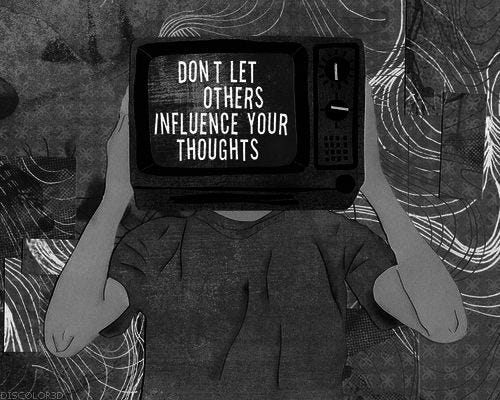
and no one is coming to save you from it. the companies are paid to make it worse. the government won’t legislate your phone out of your hand. your friends are losing the same fight.
the only person who can install a moat between your monkey mind and the abundance is you.
FIVE RULES TO STEAL
1. friction on the bad. ease on the good.
phone in another room overnight. charger in the kitchen. apps that hijack you go to a folder on the second screen, never the home screen. books on the bedside table, kindle pre-loaded. the friend you want to call: number favourited.
this is engineering.
you don’t trust yourself in the moment because the moment is rigged.
make the decisions when you’re calm and well-fed.
pre-commit.
2. one boring window per day.
pick a 30-minute window where you do nothing. no phone, no podcast, no audiobook, no music, no input. walk. stare. wash dishes. lie on the floor.
this window is non-negotiable because it’s the only time your dopamine baseline gets to reset. if every gap in your day is filled with stimulation, the meter never zeroes.
boredom is not the enemy.
it is the medicine.
3. protect the first hour.
the hour after you wake up belongs to your prefrontal cortex, before the mesolimbic system has been switched on for the day.
no phone in that hour. no email. no socials.
read. stretch. write. sit. drink water. look out the window.
whatever circuit you fire first wins the day.
if you start with an infinite scroll, the rest of your day is uphill against your own brain.
4. variable rewards stay capped.
anything pull-to-refresh is a slot machine. Twitter. Instagram. Reddit. LinkedIn. dating apps. even Slack now.
cap them. app timer for 30 minutes a day. greyscale on. notifications off, all of them, except actual humans.
if you cannot use the app inside the cap, the app is not a tool you own.
the app owns you.
5. the recalibration sprint.
once a quarter, do a 7-day reset. Lembke’s clinical recommendation is actually 30 days for people in clinical addiction states, but a week is enough for a working professional to feel the baseline come back.
rules: no scrolling apps, no Netflix, no online shopping, no constant podcasts. the only inputs allowed are books, conversation, music with no algorithm, walking, work.
day 3 is hell. day 5 something starts to come back.
day 7 you remember what your own thoughts sound like.
that sound - that’s your signal. that’s the thing the abundance has been drowning out.
THE BOTTOM LINE
your brain was built for the jungle.
you live in a casino now.
every app, every feed, every notification is a slot machine engineered by smarter people than you to extract your attention.
you will not out-discipline them. you will not out-willpower them.
you have to design rules.
because the default settings of the modern world are designed for someone else’s profit, not your peace.
the Gita talks about indriya nigraha - the discipline of the senses. Krishna isn’t telling Arjuna to hate his impulses. he’s telling him to run the kingdom instead of letting the kingdom run him.
same fight. 5000 years later.
just with better lighting.
until next week,
Drishti ‘primal_brainer’ Pandita
P.S. if you build your five rules, reply and tell me what they are. i read everything.
This was such a “I know this but I needed it” article. Thank you.
Kendall drew me in, only for me to realize everything that's wrong with my life - safe to say this was such a valid read.