

How To Build Expertise While Learning
The Expert Myth

i was 22 when i finally figured out what i had been doing for four years.
it finally happened on a random tuesday.
i was on a call with a founder friend. we were trying to figure out who to hire for growth. someone who takes a lot of bets, i said. scrappy. comes in with the mindset of building systems first, then scale them.
we hung up. i sat there for a second. and then, for some reason i could not name, i stalked my own LinkedIn profile.
mine read:
BTech. content writer. social media manager. research associate. consultant. freelance ghostwriter. product manager. growth associate. growth lead. storyteller.
ten titles. four years. four industries. three cities.
my phone buzzed. it was dad’s text. i stared at it. i didn’t reply.

i was going to reply tomorrow. i had been going to reply tomorrow for three days.
the thing screaming inside me wasn’t i am behind. though that was loud.
it was something quieter.
what if all of it was a waste?
i sat with that, for a long time. longer than i thought i would.
and then i started to see something i had not been able to see before.
something the call earlier had cracked open without me noticing. something my own sentence had given away. “Systems scale”.
what if i had been building one all along.
what if the muscle i’d been describing to my friend on the call -
was the muscle i had been quietly building inside myself for four years.
and i hadn’t even known it.
i want to tell you what i saw next.
THE MACHINE NOBODY EXPLAINS
neuroscientists call it chunking.
every brain has the same hard limit. you can hold about four to seven things in your head at once while you think. that’s the ceiling. it is why you forget the third item on your grocery list. it is why you can’t remember a phone number after hearing it once.
so how does a chess master look at a board with thirty-two pieces and just see the move?
he doesn’t. he sees five chunks.
every position he has ever played has been squeezed, in his head, into a shape he recognises. he doesn’t think about each piece. he thinks about each shape. the board has thirty-two things. his head sees five.
the limit didn’t move. the unit did.
this is what intelligence actually is.
not how fast you think. not your IQ.
it is the size of your unit.
beginners work in pieces. masters work in patterns.
THE SCIENCE (STAY WITH ME)
everyone gets pattern recognition wrong.
in 1993, swedish psychologist Anders Ericsson walked into a music school to settle a 50-year-old argument: what makes someone the best?
the violin students he studied were already child prodigies.
ericsson asked the teachers to sort them into three groups.
best - who could become world-famous solo performers.
good - who would join an orchestra.
teachers - who end up teaching violin to other people’s kids.
three groups. ten students each. same school, teachers and age.
ericsson asked everyone: how much do you practice alone.
not perform, take lessons, play with friends. those things are pleasant. those are social. those are easy.
how much do you sit alone in a small room with your violin and a piece of music you cannot yet play, working on the bar that keeps going wrong, listening to yourself fail, fixing it, failing again, fixing it, for hours, with no one watching.
he called this deliberate practice..
the teachers group had done around 3,400 hours by age 18. the good group 5,301. the best group 7,410.
by age 20, the elite group would hit roughly 10,000 hours. the 10,000-hour rule, made famous by Malcolm Gladwell’s Outliers, says that’s how long it takes to master any complex skill.
there’s another one.
a swiss chess master named Fernand Gobet got curious about himself in his twenties. he was good enough to play for the swiss national team, and he could not explain why. he saw things on a board that other people couldn’t. he didn’t even know what he was doing when he saw them. so he stopped playing chess seriously and went back to school for a PhD in how the brain works, just to figure out what was going on inside his own head.
over the next 20 years, gobet put chess players inside brain scanners and watched what happened while they looked at chess boards.
He found when beginners look at a chessboard, the activity in their brain lights up in the thinking and problem-solving parts.
when experts look at the same board, the activity shifted to the parts of the brain that store long-term memory.
the expert is not solving the position.
the expert is remembering it.
YOUR GRANDFATHER’S CAREER WAS DIFFERENT
now zoom out.
your grandfather probably worked at one place for thirty-five years. so did your father. their job at twenty-five looked a lot like their job at fifty-five. the office was the same. the work was the same. by year twenty, they were the person in the room who just knew things.
their brain had built the chunks the way human brains have built chunks for thousands of years - slowly, deeply, in one place, over a lifetime.
your career is not that.
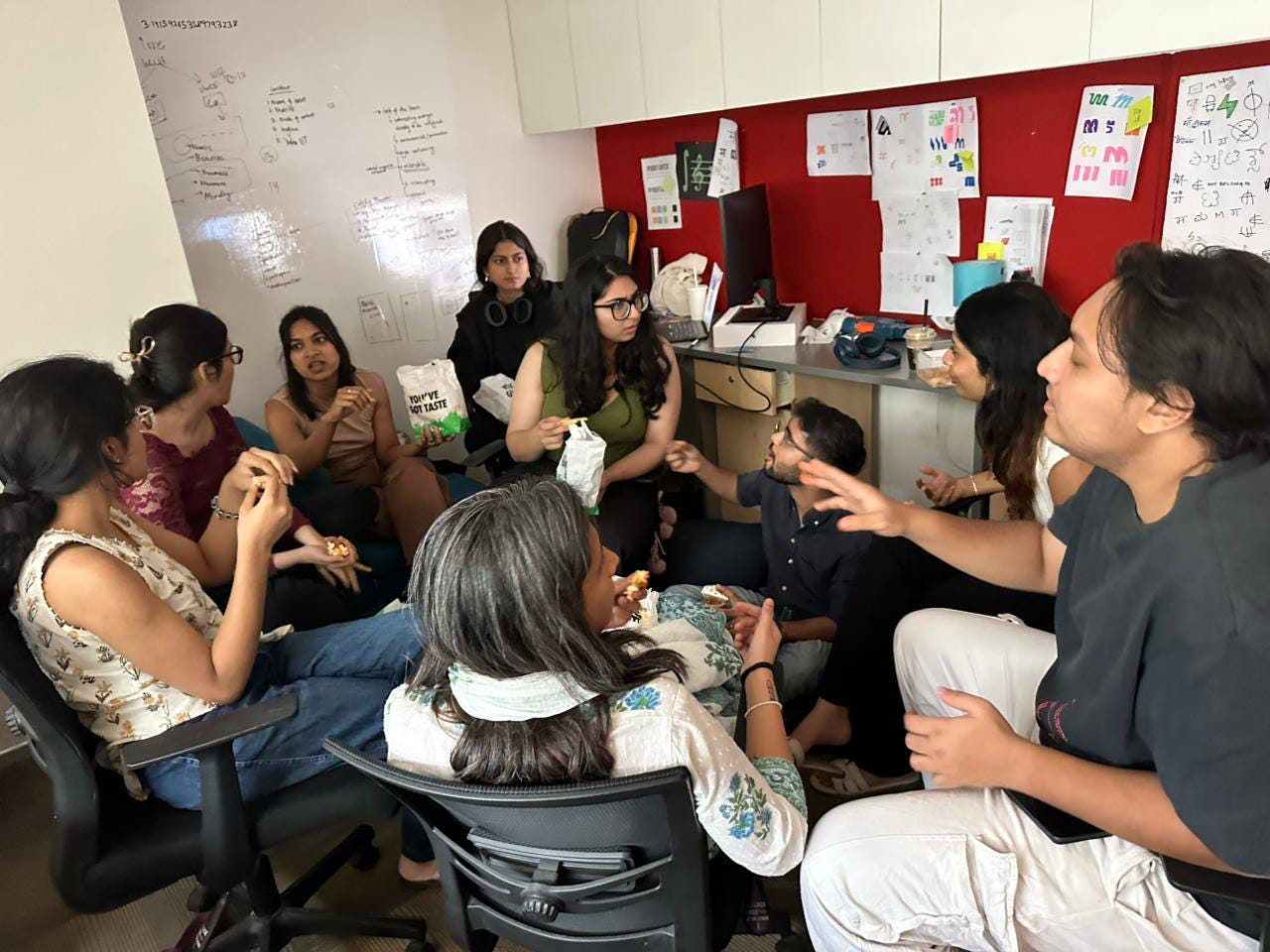
you are switching companies every two years. you are switching industries every five.
so you panic. you compare yourself to the friend with four years at one company. you assume she is winning because her path makes a clean story. and your dad is asking why you keep moving and you don’t have an answer.
but here is the thing your family doesn’t know yet.
the career your grandfather had does not exist anymore. the world doesn’t reward depth in one place the way it used to. it rewards the rare person who has chunks across many rooms - and can see the pattern that connects them.
that person looks scattered for a long time.
then year four arrives. and the shapes connect.
AND THE WINNERS KNOW IT
there’s a second layer.
most of the people you watch winning today did not take the linear path. they took the loop.
elon musk sold PayPal in 2002 and started SpaceX with no rocket experience.
for six years he tried to build a rocket. three of them blew up.
by august 2008 he had no money left, Tesla was nearly dead, and the fourth rocket was being assembled in six weeks out of spare parts.
he later said the fourth launch was the last money they had - if it failed, that would have been the end of SpaceX.
it didn’t fail. on september 28, 2008, falcon 1 became the first privately built rocket in history to reach space. three months later nasa called and offered him a contract for one and a half billion dollars.
the version of this story told on instagram is delusional optimism.
but what happened is that musk had been chunking rockets for six years. every failure was a chunk.
james dyson spent five years and built 5,127 prototypes of a vacuum cleaner before one worked. his wife taught art classes to keep the house running. by prototype 4,000, any sane person would have called it a failure. he didn’t stop because every prototype was teaching him a chunk. by 5,127, the chunks added up to a vacuum.
WHAT’S ACTUALLY HAPPENING TO YOU
1. it’s not a strategy problem. it’s a chunks problem.
strategy is what you build after you have enough chunks to make a real choice. before that, every “strategic” move is just a guess.
you’re not behind. you’re collecting.
2. effort doesn’t scale. position does.
seeing across rooms is a different skill. it comes from being in many rooms, not from effort. your brain only builds chunks when it’s uncomfortable - when it’s noticing something it doesn’t have a word for yet.
the moment a room makes full sense, it stops teaching you.
3. delusional optimism isn’t blind hope. it’s trust, mispriced.
every time you try again, with attention, you fix one more thing. try enough times. one of them works. that’s not faith.
that’s just how numbers work.
THE FIX STARTS WITH YOU
it’s easy to read this and decide that every restless, confused, half-committed twenty-something with a messy resume is secretly building a masterpiece.
the cautionary tale, at the largest possible scale, is theranos.
elizabeth holmes dropped out of stanford at 19 to build a machine the size of a printer that could run two hundred different blood tests on a single drop of blood and raised nine billion dollars.
she became the youngest self-made female billionaire in the world.
there was one problem.
the machine didn’t work.
for 15 years, theranos ran fake demos for investors
in 2022 she was sentenced to 11 years in prison for fraud.
delusional optimism without the noticing is fraud, not founder.
the loop only builds the muscle if two things are true:
1. you commit to each room: you go deep. you make at least one playbook in every role - even a tiny one. something that lasts after you leave. something a successor can run.
2. you pay attention to what repeats: the moment something at role 1 reminds you of something at role 2, you don’t move on. you sit with it. that moment of huh, this looks familiar is the entire game. that is your brain trying to fire a chunk.

FIVE RULES TO STEAL
1. one playbook per room.
no matter how short the stint, leave one document behind. how this team onboards. how this funnel works. how this client argues. write it for the next person, not for yourself. if you can’t write a playbook, you weren’t actually paying attention.
2. keep a “huh, this looks like” log.
notes app. every time something in a new room reminds you of something in an old room, log it. don’t try to be smart. just notice. six months in, read it back. that list is the shape of your specific knowledge. it works. it is the cheapest career hack in the world and almost nobody does it.
3. switch on a thesis, not on a feeling.
restlessness is data, not a verdict. before you leave a role, ask: what specifically am i trying to learn next that this room can’t teach me? if you can’t answer in one sentence, you’re not ready to switch. you’re just bored. boredom is not a strategy. curiosity is.
4. hire your own replacement, even when no one asked.
the day you write a playbook good enough that someone else can run it, you’re free to enter the next room. most people guard their work because they think their job security is in being the only one who knows. that’s the slowest version of the game. the fastest version is making yourself replaceable so you can compound.
5. Long term bet.
zoom out. give yourself time before you compare your CV to anyone else’s. patience here is not a virtue. it is leverage.
THE BOTTOM LINE
your career was designed for a world that no longer exists.
the muscle this world rewards is the one almost nobody has been told to build. chunks across rooms. the only way to build it is to sit in many rooms.
it is not luck. it is not talent. it is the slow, attentive, repeated work of letting your brain build a library.
the same people keep winning because they ran this loop long enough for it to compound. and almost nobody around them could see it happening, because while it’s happening, it doesn’t look like winning. it looks like flailing.
until next week,
stay in the room,

Drishti
So it's time for the generalists who can be part of different rooms and wear multiple hats.
incredible